
In the world of commerce, logistics is the unseen force that keeps the gears of global trade turning. From the moment a product is manufactured to the time it reaches a customer’s doorstep, logistics plays a pivotal role in ensuring that goods move efficiently and seamlessly. In this blog, we’ll delve into the fundamental concepts of logistics, with a particular focus on supply chain management and transportation.
1. Supply Chain Management: The Backbone of Logistics
Supply chain management (SCM) is the art and science of planning, implementing, and controlling the flow of goods and services from their point of origin to their final destination. Think of it as the intricate web that connects manufacturers, suppliers, warehouses, distributors, and retailers. Here are the key components of supply chain management:
- Sourcing: The process of identifying and selecting suppliers who can provide the necessary materials or components for manufacturing.
- Production: The transformation of raw materials into finished products.
- Inventory Management: Efficiently storing and tracking goods to meet customer demand without excessive overstock.
- Distribution: The process of delivering finished products to distributors, retailers, or directly to customers.
- Customer Service: Ensuring that customers’ needs are met, including order processing, delivery, and returns.
Effective supply chain management minimizes costs, reduces delays, and maximizes customer satisfaction. It’s a delicate balancing act that requires precise coordination and constant optimization.
2. Transportation: Bridging the Gaps
Transportation is the physical movement of goods and people from one location to another. It’s a critical component of logistics as it bridges the gaps in the supply chain. Here are the primary modes of transportation used in logistics:
- Road Transportation: This includes the use of trucks, vans, and other vehicles for land-based transportation. It’s flexible and ideal for short to medium distances.
- Rail Transportation: Trains are used for bulk cargo transportation over long distances, offering a cost-effective and environmentally friendly option.
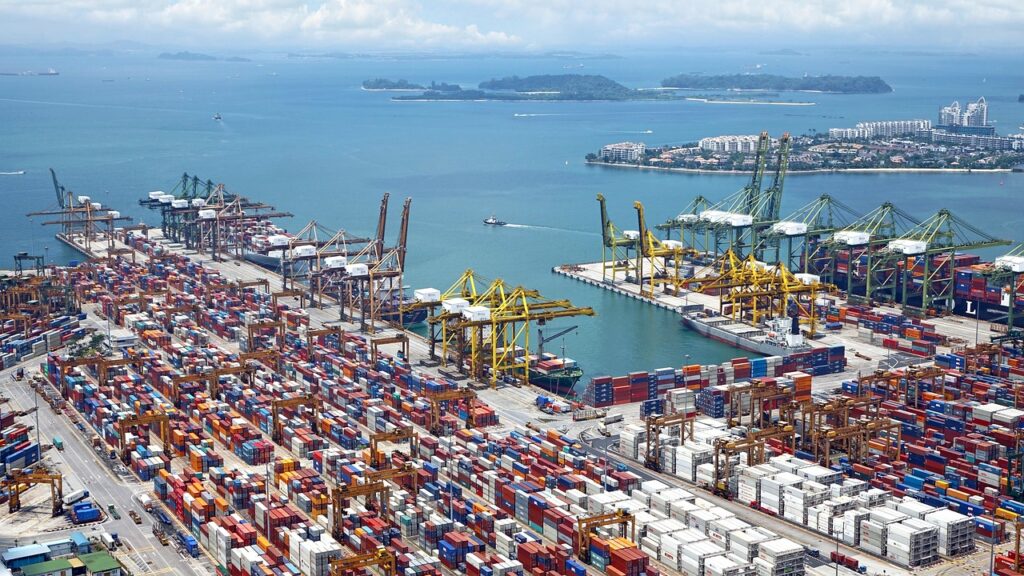
- Maritime Transportation: Ships are vital for transporting goods across oceans. Container ships, in particular, are the workhorses of global trade.
- Air Transportation: Ideal for time-sensitive and high-value goods, air transport provides the fastest delivery option.
- Intermodal Transportation: Often, a combination of these modes is used to optimize efficiency and cost-effectiveness.
Transportation logistics involves planning routes, choosing the right mode of transport, managing cargo, and ensuring timely delivery. It’s a complex puzzle that logistics experts solve every day.
3. Technology’s Role in Logistics
Technology is revolutionizing logistics. Software solutions, data analytics, GPS tracking, and automation are just a few examples. These innovations enhance visibility, reduce errors, and enable predictive analysis, allowing companies to make more informed decisions and improve overall efficiency.
In conclusion, logistics is the invisible hand that guides the flow of goods and services in our interconnected world. Supply chain management and transportation are its two fundamental pillars. Understanding these concepts is crucial for businesses aiming to optimize their operations, reduce costs, and provide top-notch customer service. As technology continues to advance, logistics will evolve, and staying informed and adaptable will be key to staying ahead in the ever-changing world of global trade.

