Increasing journey lengths and rising demand have exacerbated the issues of container shortages and port congestion in Asia, reminiscent of the pandemic years. The early onset of the peak shipping season, combined with Red Sea detours absorbing shipping capacity and delaying schedules, has intensified vessel congestion at ports, container shortages, and elevated freight rates. This analysis by Judah Levine, Head of Analysis at Freightos, paints a picture of the current maritime industry landscape.
Current Global Congestion
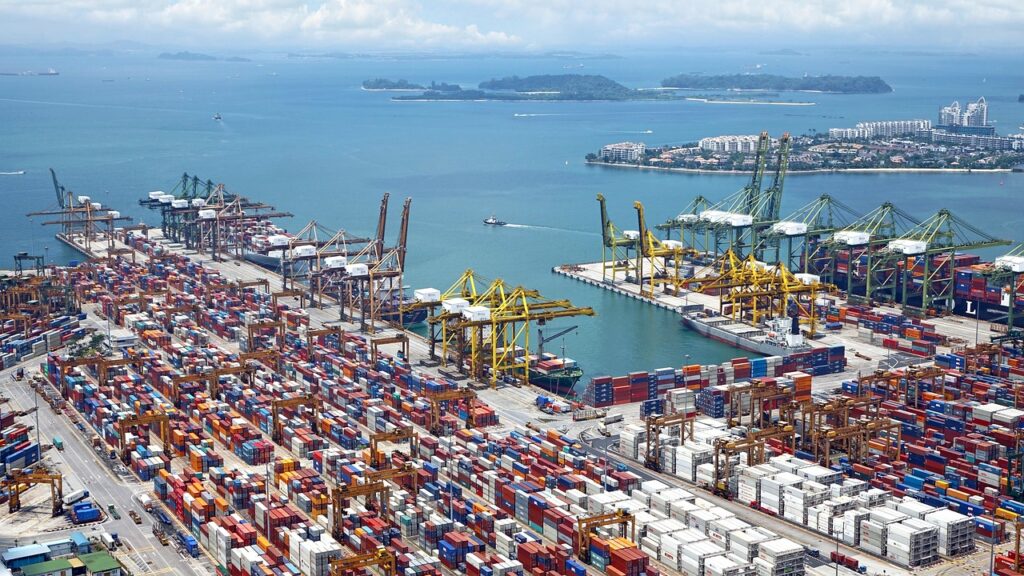
According to Levine, global congestion is immobilizing around 7% of total capacity, with Singapore as the worst example. Detours have increased transshipment volumes to Middle Eastern and Red Sea destinations, causing some ports to be skipped to keep schedules on track. The situation has led Singapore, the world’s second-largest port, to reactivate a dormant terminal to handle over forty ships waiting up to seven days for berthing slots. Other Asian ports, like Jebel Ali in the UAE and Shanghai/Ningbo in China, face similar challenges.
Container Shortages
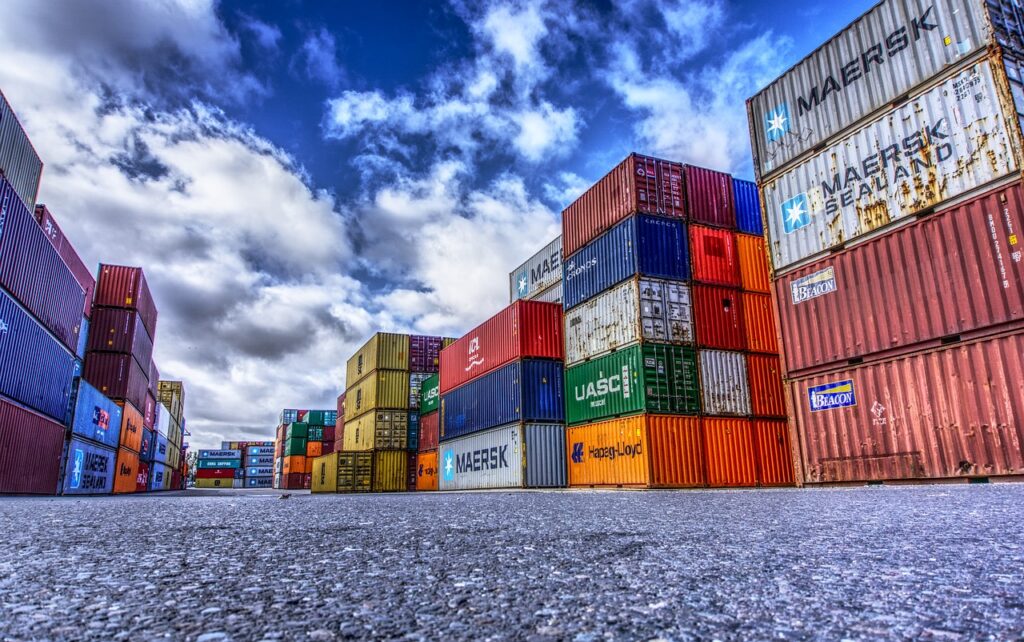
Container shortages have always been a latent threat in the maritime industry due to the nature of international trade. China, as a net exporter, contrasts with the US and Europe, net importers, necessitating that about one-third of global containers are transported empty for repositioning. This usual difficulty has been worsened by stronger-than-expected demand. Detours via the Cape of Good Hope mean ships spend more time at sea, reducing available capacity and containers. «We simply need more containers to transport the same amount of goods,» noted Hapag-Lloyd’s CEO, Rolf Habben Jansen.
Impact and Observations
The longer shipping and repositioning cycles are now showing their impact. «We are now seeing clear signs of container shortages, which, combined with port congestion, remind us of the COVID years,» said George Youroukos, Executive Chairman of Global Ship Lease Inc., as highlighted by Bloomberg. Equipment isn’t returning to China as quickly as capacity operators had hoped. Ligentia, a supply chain management company, reported that nearly all shipping lines operating in Shanghai lack empty containers. Bloomberg warns that this shortage could become more pronounced in the coming weeks and months, as empty containers aren’t available where they should be, according to Constantin Baack, CEO of Norway’s MPC Container Ships ASA.
The Negative Cycle
This situation creates a negative feedback loop: ships navigate longer routes due to detours, reducing available capacity and containers; repositioning empty containers in Asia takes longer, leading to ship congestion at ports waiting to load full containers without equipment to restart the cycle. This scenario potentially threatens other maritime routes beyond the main global ones. The result: rising freight rates.
Potential Solutions
One obvious solution is to increase the container fleet with new units. Currently, almost all containers are manufactured in China, and the country is ramping up production. According to Bloomberg, Chinese factories produced nearly the same number of containers in the first five months of this year as during the same period in 2021. However, “most factories are fully booked for major orders until late summer,” warns John Fossey, Head of Leasing and Container Research at Drewry.
Conclusion
The maritime industry faces structural challenges requiring stakeholders to recalibrate expectations and strategies. Preparation for ongoing delays, longer delivery times, and higher costs, especially during peak periods, is essential. Whether the domino effect will continue or pressure will ease after the initial panic remains to be seen. For now, the message is clear: these conditions will persist until further notice.