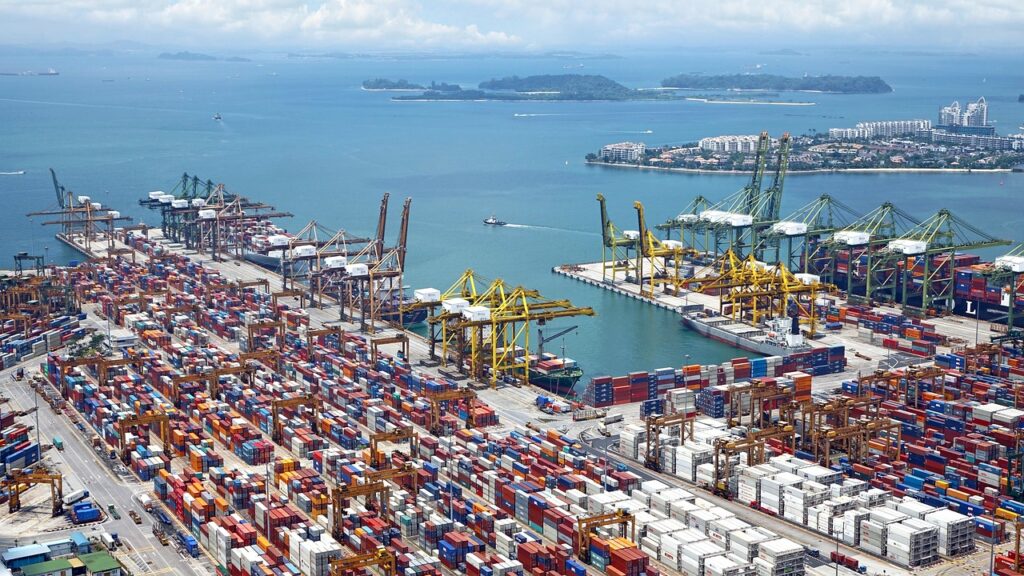
Today, ships are sailing with unprecedented loads due to the shift towards containerization of automobiles, a departure from the traditional RORO vessels.
Rates, those ever-fluctuating figures influenced by the ebb and flow of supply and demand, have soared to over $7,000 per container on the journey from Asia to the western coasts of South America. This steep climb paints a picture of ascent that has caught many off guard and left others deeply concerned.
While some may argue that events in the distant Red Sea should have no bearing on Latin American waters, the interconnected nature of global maritime trade tells a different story. Every move in this intricate chess game of logistics reverberates across continents and oceans.
Meanwhile, across the Pacific in the United States, the looming threat of strikes has prompted businesses to expedite their shipments to avoid potential disruptions to their operational flow.
In Mexico, a country now at the forefront of the ‘nearshoring’ trend, ports are bracing for a significant influx of cargo volumes that are poised to reshape the country’s logistics landscape.
As the market in Mexico experiences year-over-year growth rates of up to 17%, the sight of massive vessels unloading in Mexican ports only to set sail again almost empty serves as a poignant reminder of the complexities of global trade.
These dynamic shifts are driving freight rates to unprecedented heights, leaving customers watching from the sidelines as the cost of realizing their business aspirations reaches astronomical levels.
In narrating the tale of freight rates, we uncover a narrative of interconnectedness and interdependence—a story where even the most remote ports and distant seas are bound by invisible threads of commerce.
And so, against the backdrop of the vast expanse that encompasses both Asia and Latin America, ships continue their maritime dance, propelled not only by the forces of nature but also by the intricate machinations of the ever-evolving human market.